
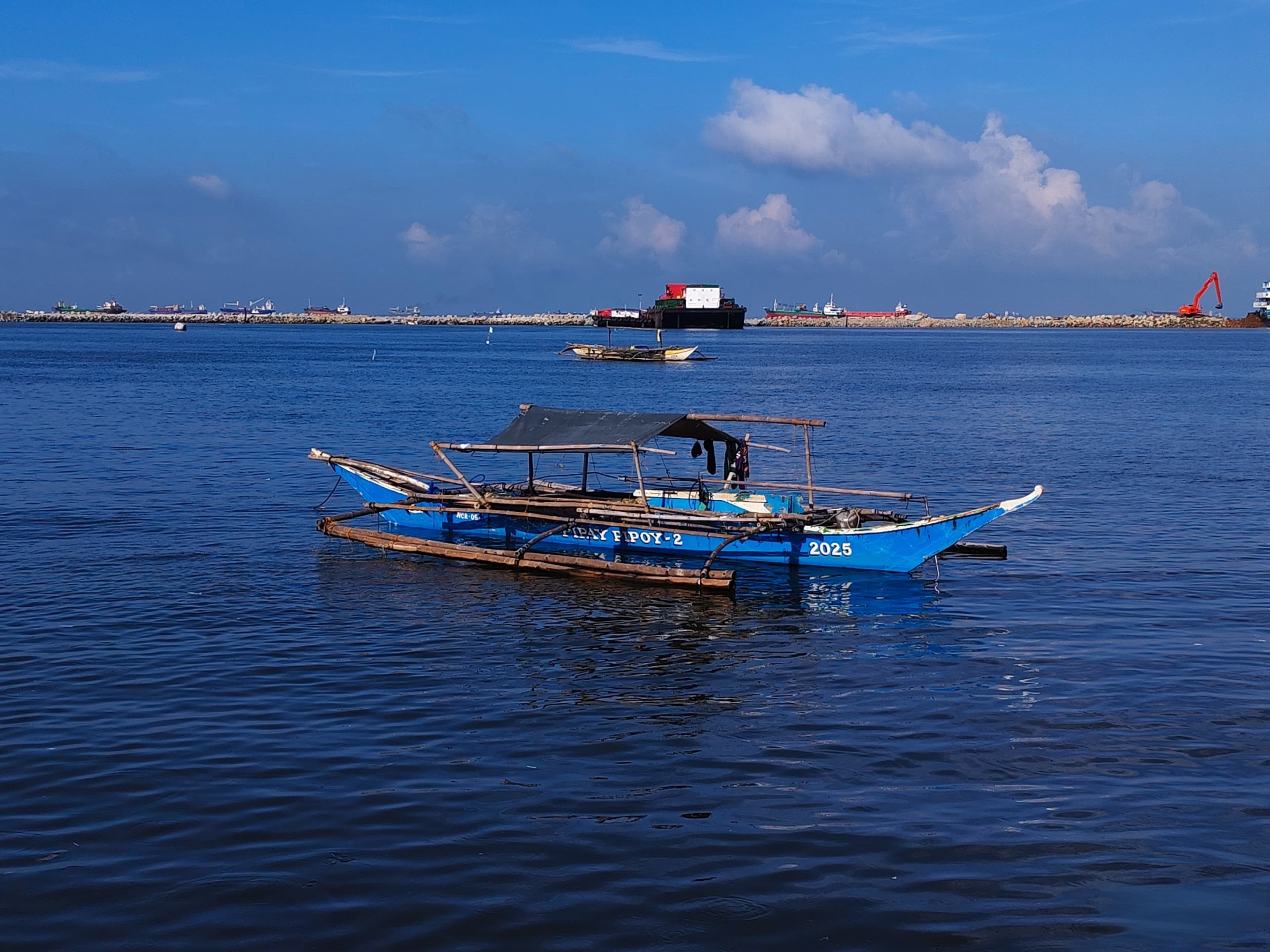
CITY OF NAVOTAS, Metro Manila — Before dawn breaks over Barangay Sipac Almacen, the sea is already awake.
At four in the morning, when much of Navotas is still asleep, 25-year-old Arvin Escarial pushes his boat away from the shore. The tide is calm, interrupted only by the soft hum of engines and the splash of paddles cutting through Manila Bay. He has followed this routine for as long as he can remember—first alongside his parents, then on his own, where he learned to read the sea before he had learned to read books.
But today, his boat sails toward waters that no longer feel like home.
The bamboo stakes (tahungan) that once stood in orderly rows across the bay, particularly the tahungan where mussels clung and generations of Navoteños built their lives, have largely vanished. In their place now rise mounds of reclaimed earth, dredged sand, and construction equipment that have transformed both the shoreline and the future of families long dependent on the sea.
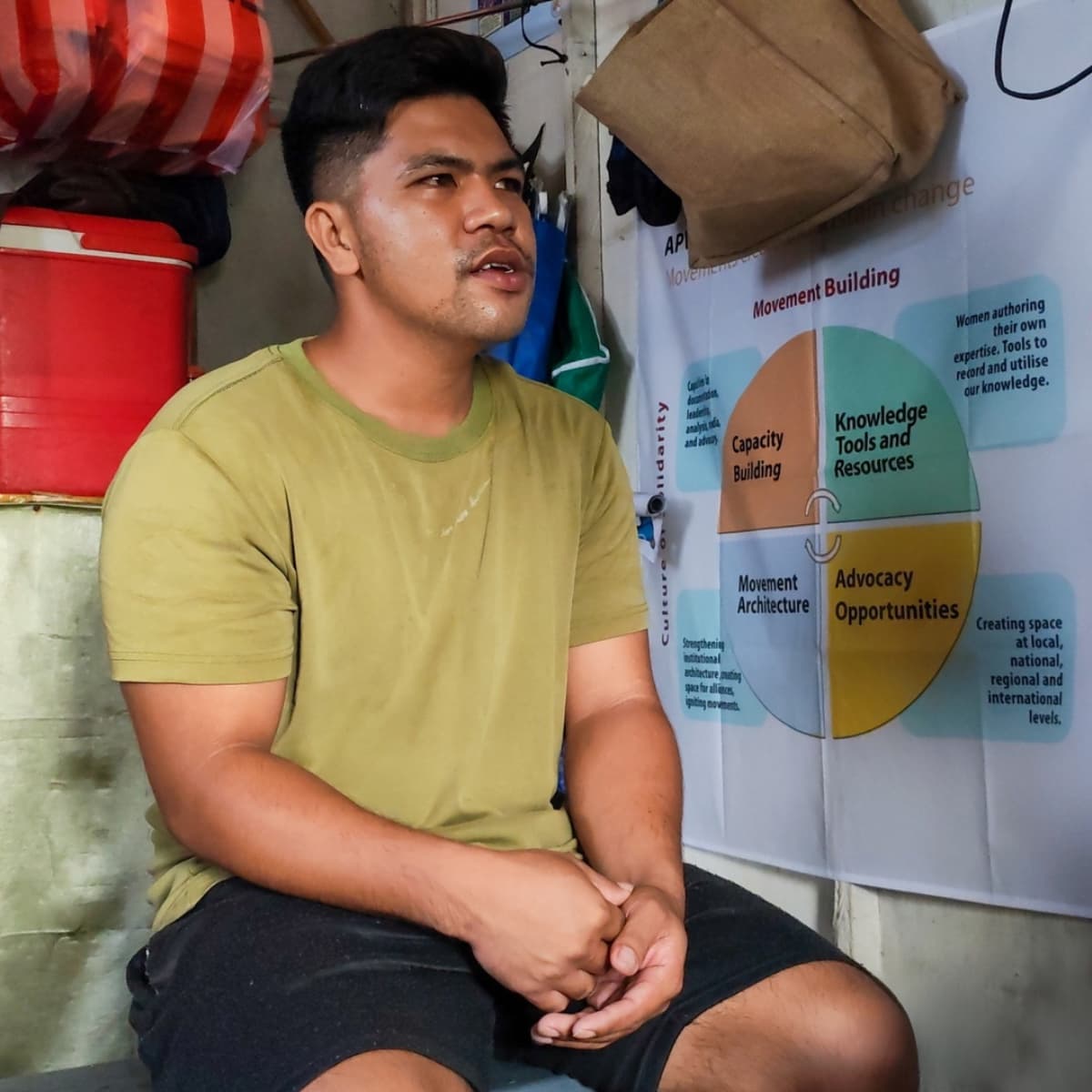
“Lumaki akong pinanonood mga magulang ko sa pagtatahong,” Arvin said. “Kinalaunan, naipasa sa’min yung kabuhayan na ‘yon. Hindi lang siya basta hanapbuhay, parte na rin siya ng pagkatao namin.”
Like many families in Navotas, the Escarials built their lives around the bay. They head to the sea by dawn, and when they return in the morning, their boats are heavy with mussels. These are destined for local markets, providing enough not only for daily needs but also for school expenses, medicine, and savings for the months when rough weather kept boats ashore.
Unlike mussels from neighboring provinces, Navotas’ harvest sold quickly, earning a reputation among traders for its freshness and quality.
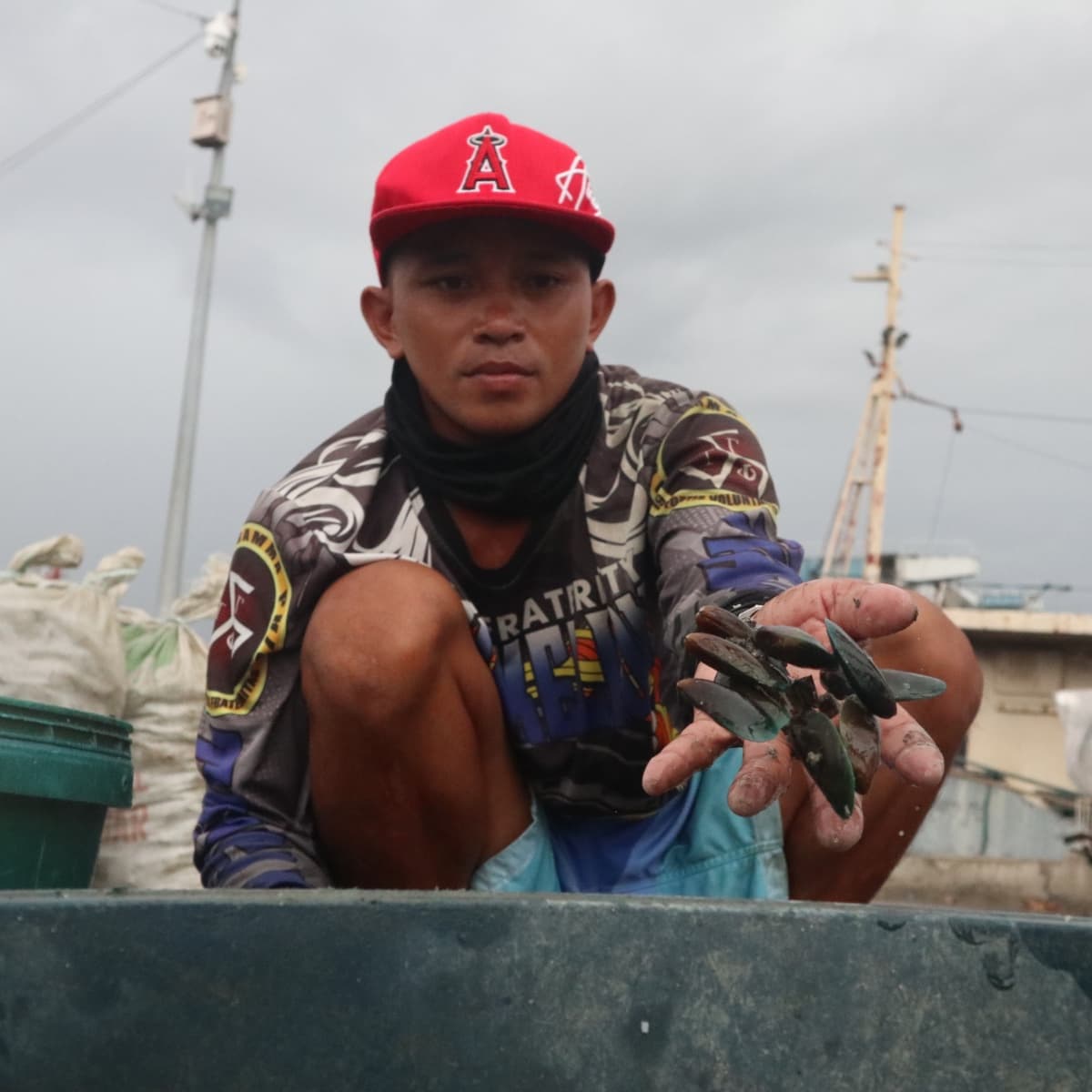
“Mailalarawan kong progresibo na ang Navotas noon,” Arvin said. “Halos lahat dito binubuhay ng tahong.”
Then the shoreline began to change: In 2021, Arvin noticed trucks unloading soil near Market 3, one of the city's busiest fish landing sites. The open water where fishermen once docked slowly narrowed as filling activities expanded toward the bay. Boats that once had room to maneuver became crowded against one another.
The transformation was part of the Navotas Coastal Bay Reclamation Project, a large-scale coastal development envisioned to create residential, commercial, industrial, and port facilities on reclaimed land along Manila Bay. According to the project's Environmental Impact Statement (EIS), the project was proposed to diversify the city's economy through urban and industrial development, while positioning Navotas as a future hub for port, logistics, and industrial activities along Manila Bay.
Navotas fisherfolk raised concerns during the project's 2020 public hearing, where Rodolfo Rondon, chairman of the Navotas City Fisheries and Aquatic Resources Management Council, warned that reclaiming more than 500 hectares could limit the city's aquatic food sources and severely affect fishermen's livelihoods. In response, Jess Addawe, an EIA preparer, said the project’s Social Development Program included the possible formulation of alternative livelihoods for displaced fisherfolk, subject to review and assessment by the Environmental Management Bureau.
For Arvin and many other mussel farmers, however, the promised transition has not replaced the livelihood they built around the sea. By 2024, the Escarial family’s tahungan had been demolished.
Arvin said the demolition left fisherfolk without meaningful consultation, compensation, or a viable alternative livelihood. Without mussels to harvest, he sold the family’s boat in hopes of supporting his household, but eventually had to rely on occasional work as an extra hand aboard other fishermen’s boats whenever crews needed another person.
“Pumapalaot pa rin ako,” he said. “Pero hindi na talaga katulad ng dati.’’
The loss of the tahungan also fractured the rhythm of family life.
When his mother suffered a stroke, mounting medical expenses coincided with the demolition of their tahungan, forcing the family to separate as they struggled to afford living costs in Navotas, with his mother eventually returning to Samar. Romel Escarial, Arvin’s older brother and a leader of PAMALAKAYA-Navotas, said their family's experience reflects the wider loss of livelihood among fisherfolk in the community.
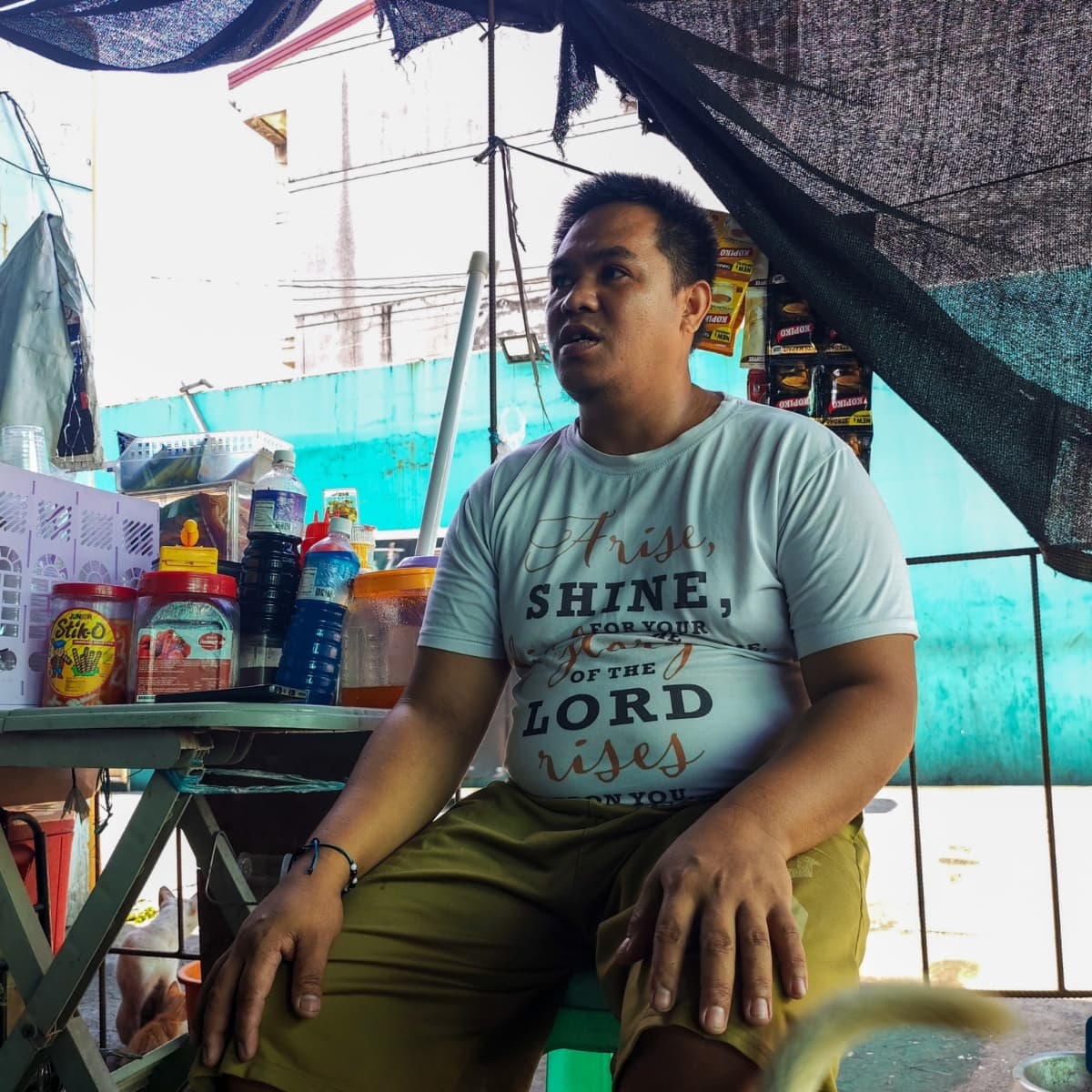
According to Romel, many fishermen now travel to Bulacan and nearby provinces to set up new tahungan where space remains, but longer journeys mean higher costs and smaller harvests; some have left Navotas or changed livelihoods, while Denise has stayed despite estimating his income has fallen by about half.
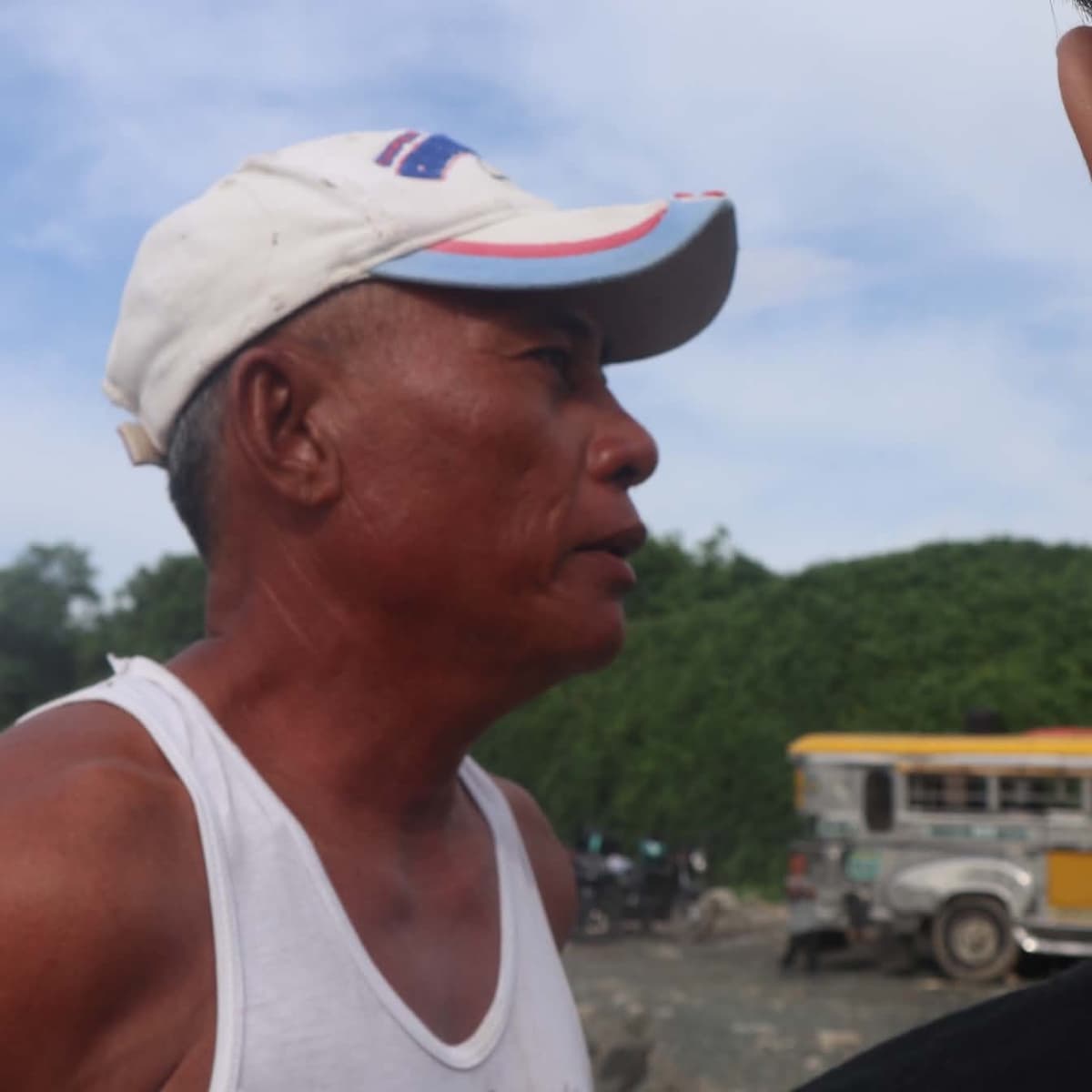
Denise said programs such as pautang and TUPAD have not provided a sustainable alternative to the work fisherfolk have long depended on. With few options beyond the sea, Arvin continues to fish and harvest mussels despite shrinking yields and greater control by middlemen, returning to the water not only for income but for a livelihood inherited from his family and a connection to the community he hopes to preserve.
What lies beneath the water
To outsiders, a tahungan may look like little more than rows of bamboo poles rising from the bay. For the people of Navotas, it has always meant something more.
Beyond producing mussels, the bamboo structures became part of Manila Bay's coastal ecosystem. Mussels naturally filter seawater as they feed, while the submerged stakes provide shelter for young fish, crabs, shrimp, and other marine life. The bay that sustained generations of fisherfolk also depended on the life that flourished beneath its surface. The project's Environmental Impact Statement (EIS) likewise describes Manila Bay as a diverse coastal wetland composed of mudflats, sand flats, swamps, beaches, mangroves, and rocky shores that support fisheries and migratory wildlife.
"Hindi lang livelihood ang tahungan," Arvin said. "Isa rin ito sa bumubuhay ng dagat."
Today, many of those former mussel-growing grounds are no longer recognizable. Areas where bamboo stakes once stood had been replaced by reclaimed shoreline, rocks, and dredged earth. In some places, only scattered shells remained where thriving mussel farms once stretched across the water.
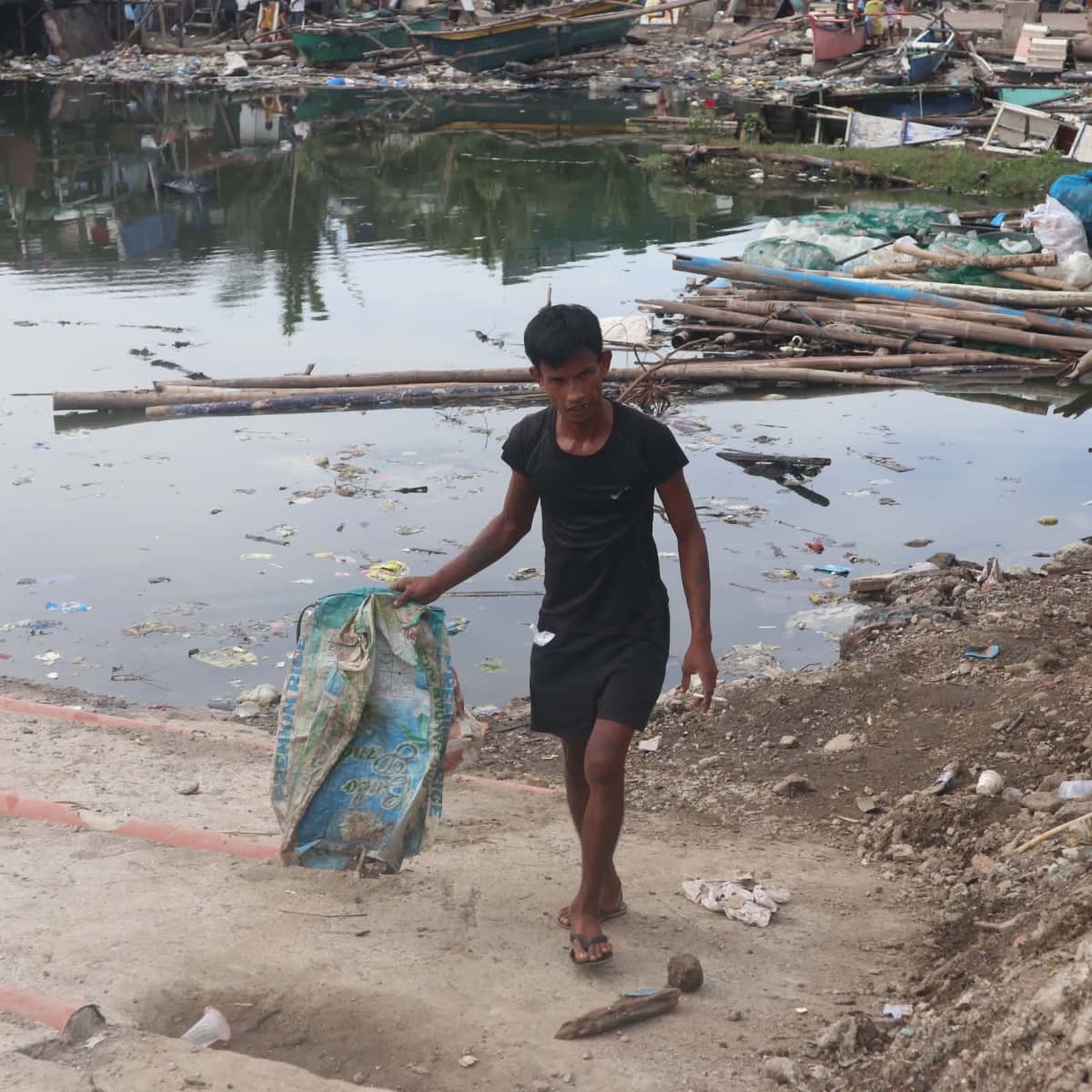
"Kapag natambakan ang dagat," Arvin said, "lumalayo ang isda. Nagbabago ang anyo ng dagat at naghahalo ang mga kemikal sa tubig.”
The scale of the loss has also pushed the community to organize beyond individual families. PAMALAKAYA-Navotas has become one of the groups through which affected fisherfolk have brought their concerns to the courts, government offices, and public demonstrations, seeking not only assistance but continued access to the livelihood they say was taken from them.
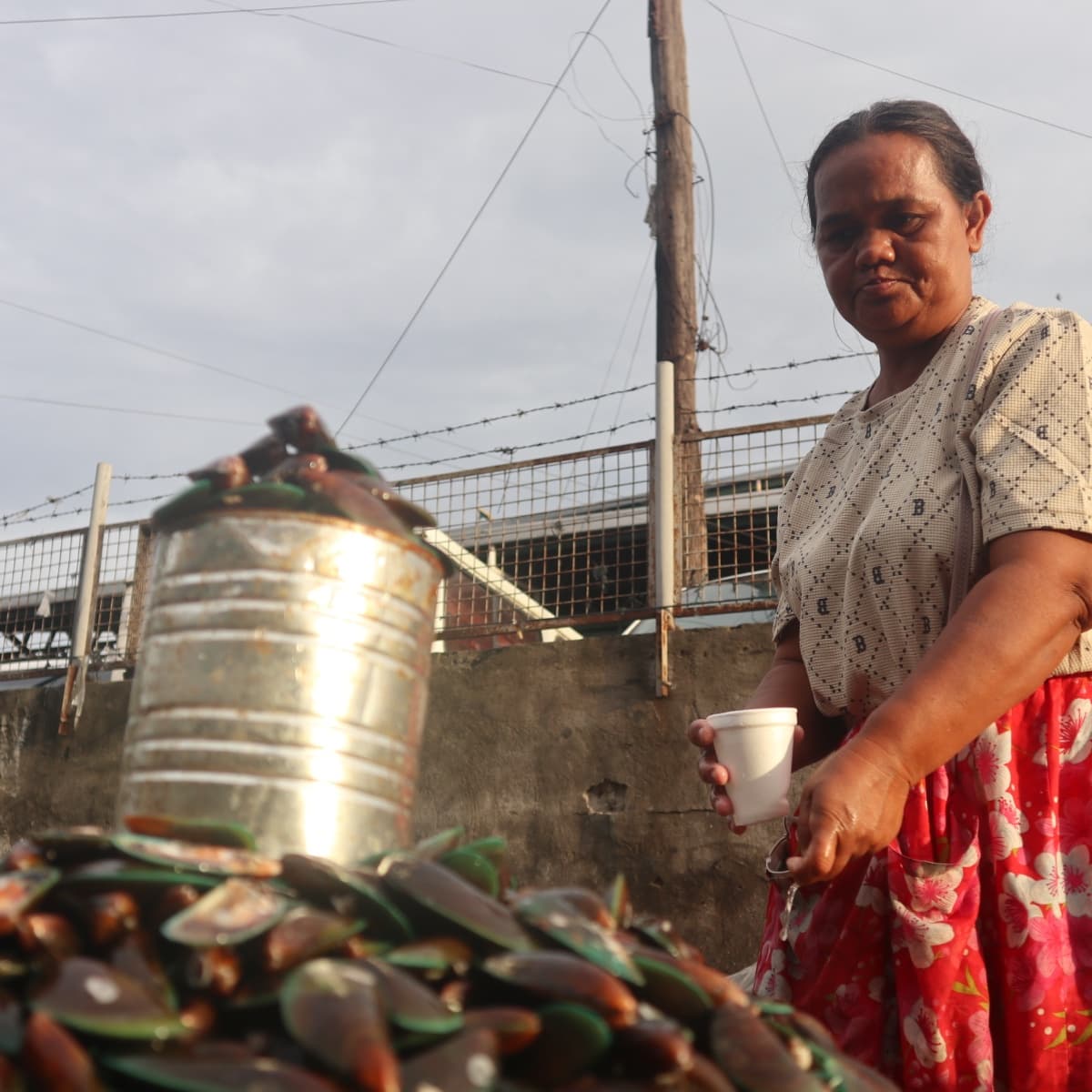
For years, PAMALAKAYA-Navotas has organized dialogues, protests, and legal appeals to protect fishing grounds and fisherfolk livelihoods, including a June 2024 petition by more than 400 members and residents seeking to halt the demolition of remaining tahungan and baklad after the group reported that more than 80% of the mussel farms in an area about six kilometers long and three kilometers wide had been destroyed; the organization also argues that the bamboo stakes contribute to the sea's productivity by providing surfaces for mussels and other organisms to grow, prompting its call for the structures to be restored.
Arvin remembers joining dialogues with the LGU and other government officials after their tahungan disappeared, where fisherfolk sought meaningful consultation and recognition of their livelihoods; he said that when they later tried to secure permits to continue farming mussels, they were told applications were no longer being accepted and were subsequently labeled illegal, raising for him a broader question about how Navotas can retain its identity as the Philippines’ “Fishing Capital” when the livelihood that helped shape it is being pushed out.
Interview requests were sent to the Bureau of Fisheries and Aquatic Resources (BFAR) and the Philippine Fisheries Development Authority (PFDA) regarding the concerns raised by fisherfolk, fisheries management, and assistance for affected communities. As of press time, both agencies have not responded to interview requests.
Even so, the story of Navotas’ tahungan is not only about what has disappeared. It is also about what remains.
Although many families have been forced to adjust how they earn a living, their connection to the sea has endured. Some continue fishing whenever weather allows. The bay remains not only a workplace, but also a place where knowledge, identity, and memory continue to be passed from one generation to the next.
As one of the younger mussel farmers in Navotas, Arvin believes that responsibility now rests with people his age.
He knows the rows of bamboo that once defined his childhood may never look the same again. Still, before dawn, he returns to the water whenever there is work to be done. Not because the sea has stopped changing–but because it remains the place that taught him who he is.
For Arvin, hope is no longer measured by whether yesterday’s shoreline can be restored. It lives instead in every young fisherman who chooses to learn the tides, every family that refuses to let the traditions of his fellow magtatahong disappear, and every community that continues to remind others that protecting Manila Bay also means protecting the people whose lives have always been shaped by its waters.
“Hangga’t may aanihin,” he said, “patuloy kaming babalik sa dagat.”
For the fisherfolk of Navotas, the future of the bay is a question of whether the generations who inherit these waters will still know why they were worth protecting in the first place.



Comments