
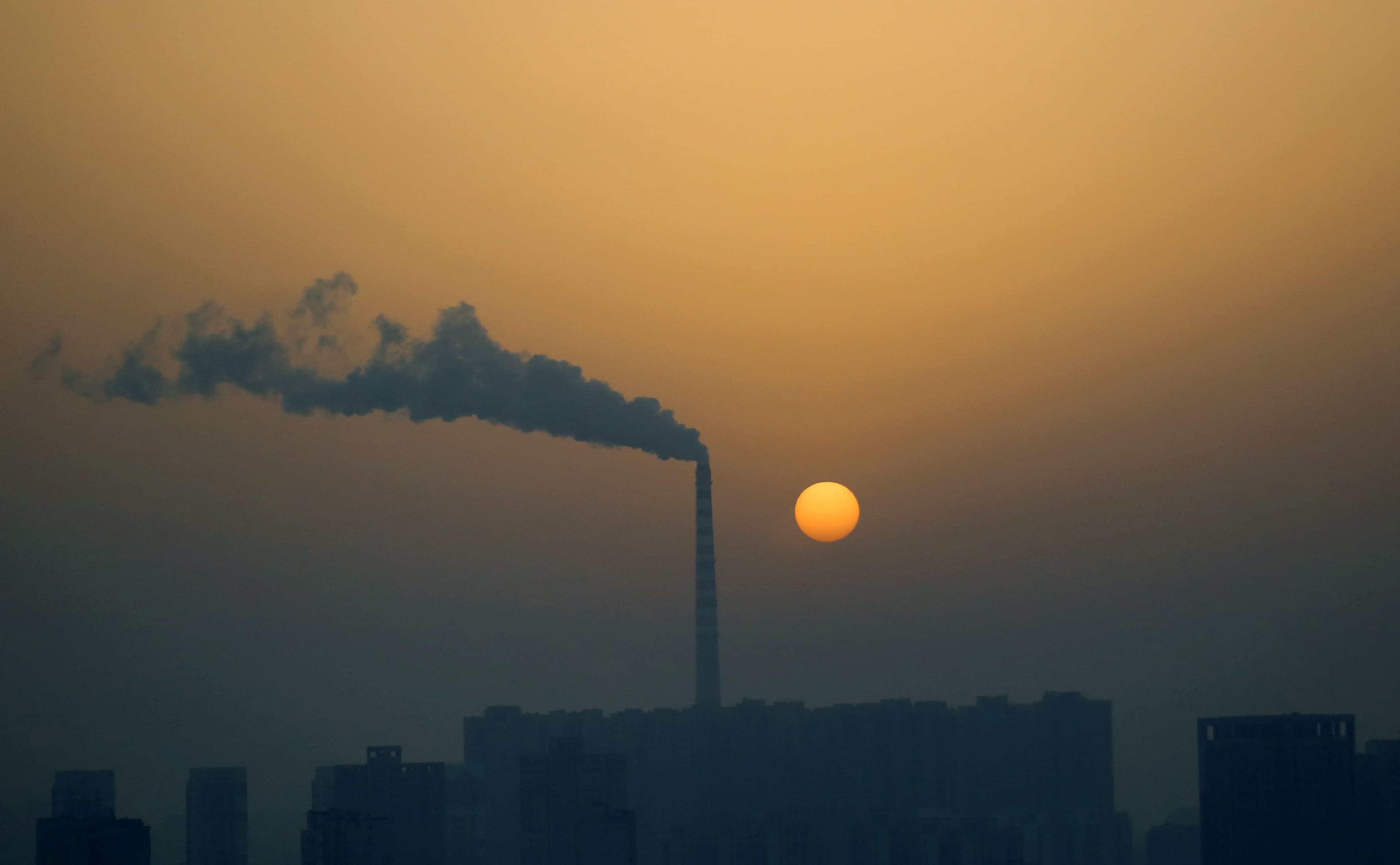
If the new UN climate report made you afraid for the future, read beyond the headline.
I was afraid too. I saw the headlines about the world overshooting 1.5°C and thought, What’s the point now?
But after reading the full report, my conclusion changed.
Our future isn’t lost. But it has changed.
The report gives us a sobering picture of where we're headed. Under current policies, the world is on track for around 2.6°C of warming by 2100. But if countries fully implement their current climate commitments and long-term net-zero targets, warming could peak at around 1.8°C.
That 0.8°C difference matters.
It means different levels of risk to human health, food and water security, ecosystems, infrastructure and livelihoods. The more warming, the greater those risks become.
And those risks aren't felt equally. The people and communities who have contributed the least to climate change are often among those most vulnerable to its impacts.
So when we talk about 1.5°C, 1.8°C or 2.6°C, we're not talking about abstract numbers.
We're talking about people's lives.
However, there is a pathway where temperatures overshoot 1.5°C, peak, and eventually decline back toward it. But returning to 1.5°C is not a reset button. Some impacts, including ecosystem losses and other irreversible changes, cannot simply be undone when temperatures eventually come down.
That makes the question for me less about “Can we still save the planet?”
Instead, we need to think “What kind of future can we still build?”
This is where I think climate action gets more interesting.
I’ve spent more than 10 years in climate change education, and if I had to translate all of this into what climate action can look like in our own lives, these are five places I would start.
However, there is no single climate action list that everyone needs to do perfectly. What you can do and what will have the most impact depends on your circumstances, your skills, your resources and, importantly, your sphere of influence.
Shift your mindset from following a prescribed checklist of “good” climate behaviors to asking a different question: Where do I have leverage? 
Because your leverage might not look like mine. 
For one person, it might be changing what they eat. For another, it might be using their professional skills to accelerate the transition. For someone else, it might be organizing their community, influencing policy, or helping people prepare for climate impacts. 
1. Start with what’s on your plate. Eat less meat.
Individual consumption won't solve climate change by itself, but dietary shifts can meaningfully reduce emissions while bringing other benefits for health and land use.
You don't have to become a perfect vegan. Eating less meat is a practical place to start.
2. Put your working hours to work. Use your career.
We spend a huge part of our lives at work. Why not spend some of that time doing something meaningful?
You could work directly in a green job, help your company decarbonize, bring climate thinking into your existing profession, or work in sectors that are helping build a low-carbon and climate-resilient economy.
Your career is not separate from climate action. It is one of the systems you participate in every day.
3. Don’t stop at personal choices.
Change the systems around you.
We cannot individual-action our way out of a fossil-fuel-powered system.
We need the shift to renewable energy, greater energy efficiency, electrification, and an end to continued fossil-fuel lock-in. We need governments, companies, and communities making better decisions about the infrastructure and development they build.
Climate action is beyond a better consumer. We need to change the systems that shape our choices.
4. Make climate action sustainable for you.
Stay grounded enough to keep going. This one is my own addition.
There will always be another terrifying climate headline. If every one sends us into panic, doom or paralysis, it becomes difficult to stay engaged for the long haul.
For me, climate action also means staying connected to my values and purpose.
We need people who can keep showing up.
5. Learn to live with it.
Build resilient communities. Even if we stopped emissions tomorrow, some level of climate change is already locked in. So adaptation matters.
And adaptation goes beyond building more floodgates and seawalls. Sometimes, the solution is also to work with nature instead of against it. Interventions include protecting mangroves, restoring wetlands, preserving forests, and creating greener, cooler sponge cities.
Ultimately, adaptation means asking what our communities need to live safely in a changing climate. How do we prepare for extreme heat? How do we protect people from floods? How do we make our food, water, homes, schools, and neighborhoods more resilient?
And most importantly:
Are the people most vulnerable actually part of deciding what adaptation looks like?
Life after 1.5°C will require more than reducing emissions. We need to build communities that can live with a changing climate and keep thriving.
I don’t think we should pretend everything will be okay.
It won't.
We've already lost some possible futures.
But we haven't lost all of them.
Every fraction of a degree still matters. Every year matters. And what we do now continues to shape how high temperatures peak, how long they stay there, how much damage occurs, and who is protected.
We need to build the best future still available to us.
No single climate action can prepare us for life after 1.5°C. There are many, and they will look different depending on who we are and where we have influence.
So find your leverage. And use it.



Comments