
Earlier this year, while creating my vision board, I added a photo of birdwatching and fieldwork featuring hornbills and other birds. I had a spontaneous thought: I wanted to learn how to identify birds. My goal was to gain at least the basic knowledge that an ornithologist possesses, even though I was unsure of where or how to begin. As an unemployed young adult at the time, I felt like the sky was the limit, until I realized it wasn’t.
When I got my first big girl job here at Haribon as the Communications Specialist, I thought it would be all production and social media work. I knew and felt that parts of my vision board were slowly coming to life: the bird vibes, getting closer to conservation work through production, and staying busy, click-clacking my way to being as productive as I can. I thought, and I still think, that the accumulated energy from the months of waiting is finally being poured into something purposeful; something bigger than myself, for conservation.
I distinctly remember the moment fieldwork was brought up to me. First out-of-the-office fieldwork, first birdwatching, first production work for Haribon, first La Mesa Ecopark experience. At the time, I was anticipating everything: what to wear, what to bring, what shots to take, what questions to ask, and what to do to stay grounded in the experience.
What I loved about the whole experience was that it felt like a subtle bridge between what I used to do as an undergraduate and what I am about to do for Haribon until who knows when. The orientation felt like I was being reintroduced to nature and human ecology from the perspective of birding. I made mental notes on not wearing light-colored clothing, being silent, and doing my best to blend in with the environment to really see and hear its raw beauty- enough for me to observe but not disturb the birds that were present.
What struck me most during the orientation was learning that birdwatching is more than simply looking for birds. It is about observing nature with intention. It teaches patience, awareness, and respect for wildlife. Every bird sighting becomes an opportunity to understand an ecosystem's health, and every observer becomes more connected to their environment. It made me realize that birdwatching is not just a hobby, but also a way to appreciate biodiversity.
“It teaches patience, awareness, and respect for wildlife.”
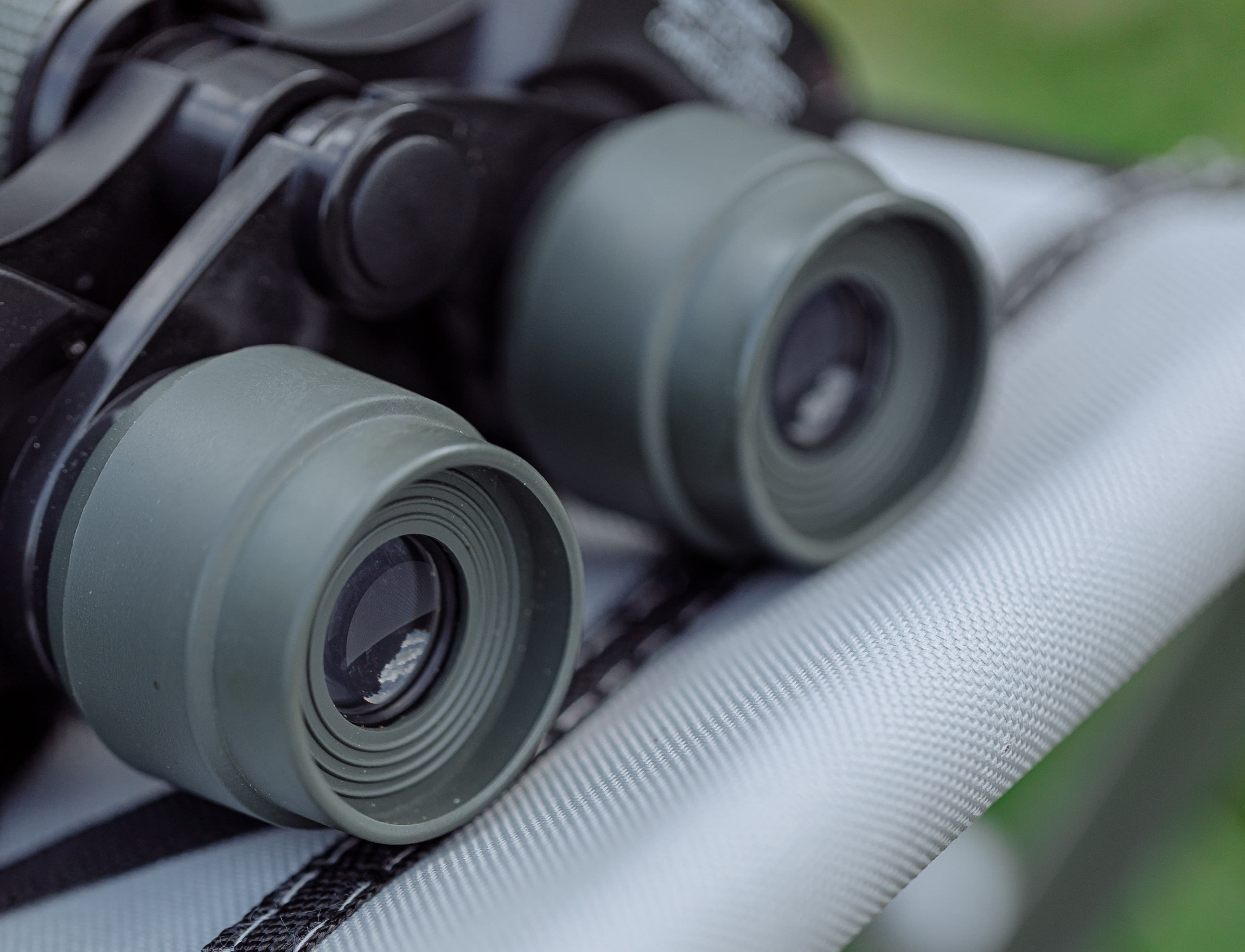
I moved around, taking clips and pictures while listening to the discussion. What first made sense to me was the fact that Kilyawan is an onomatopoeic name for the bird. As our bird guide and Haribon member, Joseph Senga, shared, many bird names describe what they are, what they look like, or even what they sound like. Purple Heron, Yellow-vented Bulbul, and Coppersmith Barbet were among the many species observed during the activity, but what really struck me was my first time seeing the Collared Kingfisher through the lenses of my binoculars, which, by the way, were around my age, as it had "October 2003" imprinted on them.
Really, the most common birds look fragile but free when viewed up close. The way the sun struck the back of the Collared Kingfisher felt like an affirmation. I am working for Haribon, and activities like this are what I will pour my heart into for the next phases of my life. We walked gently for a few more minutes, keeping our eyes open for more birds to see while listening to the morning songs of the ones we couldn't see at the time.
If I were to talk about the whole experience, I'd say I loved it because I realized that birding is an introvert-friendly activity. People have to be silent, speak in hushed tones, and focus more on what's around them rather than what's on a glowing screen. As a probinsyana myself, I loved the experience because it introduced me to a new way of experiencing nature. It felt like seeing things from a new perspective, from a birder's perspective.
Birdwatching also made me realize how conservation begins with paying attention. You cannot protect what you do not notice, and you cannot care deeply for something you have never taken the time to observe. Sometimes, all it takes is seeing a bird through a pair of binoculars to understand why forests, wetlands, and the species that call them home deserve our protection.
“Sometimes, all it takes is seeing a bird through a pair of binoculars to understand why forests, wetlands, and the species that call them home deserve our protection.”
Earlier this year, while creating my vision board, I added a photo of birdwatching and fieldwork with hornbills and other birds. Halfway through 2026, I'd say the waiting game was all worth it. Looking back, I realized vision boards don't come to life through wishful thinking alone. They come to life when opportunities meet action, and when we choose to say yes to experiences that align with what we care about.
I also realized that conservation works in much the same way. When actions are fueled by a shared passion for protecting nature, they become more than just tasks. They become something that people willingly pour their hearts into. That kind of passion does not easily fade. It grows with every person who chooses to care, every community that chooses to protect, and every morning spent quietly appreciating the birds and the forests they call home.
Waking up at 4:00 AM will always be worth it if it's for something bigger than oneself, or even if it's just to catch a glimpse of a Collared Kingfisher's back being struck by the 9:00 AM sunlight at La Mesa Ecopark.
How about you- what’s your vision for Philippine biodiversity?



Comments