
PAGAS, Cabanatuan City - Rows of colorful flowers made from recycled plastic bottles would greet Azaleah Pascual every time she walked around her home barangay in Cabanatuan City. Not a piece of trash or plastic straw was in sight.
However, a leisurely stroll around Barangay Pagas felt quite different today than it did seven years ago.
“Dati, hindi naman masyadong napapansin yung Pagas. Ngayon, nakakatuwa na nag-improve na, maraming nangyari, marami na ring achievements. Nakatutuwa lang na maraming natulungan,” Azaleah, a young resident, said regarding the drastic changes that occurred over time. (Barangay Pagas was seldom noticed before. Today, it’s encouraging to see how much has changed and improved, along with the achievements. It brings joy to know that many benefited from them.)
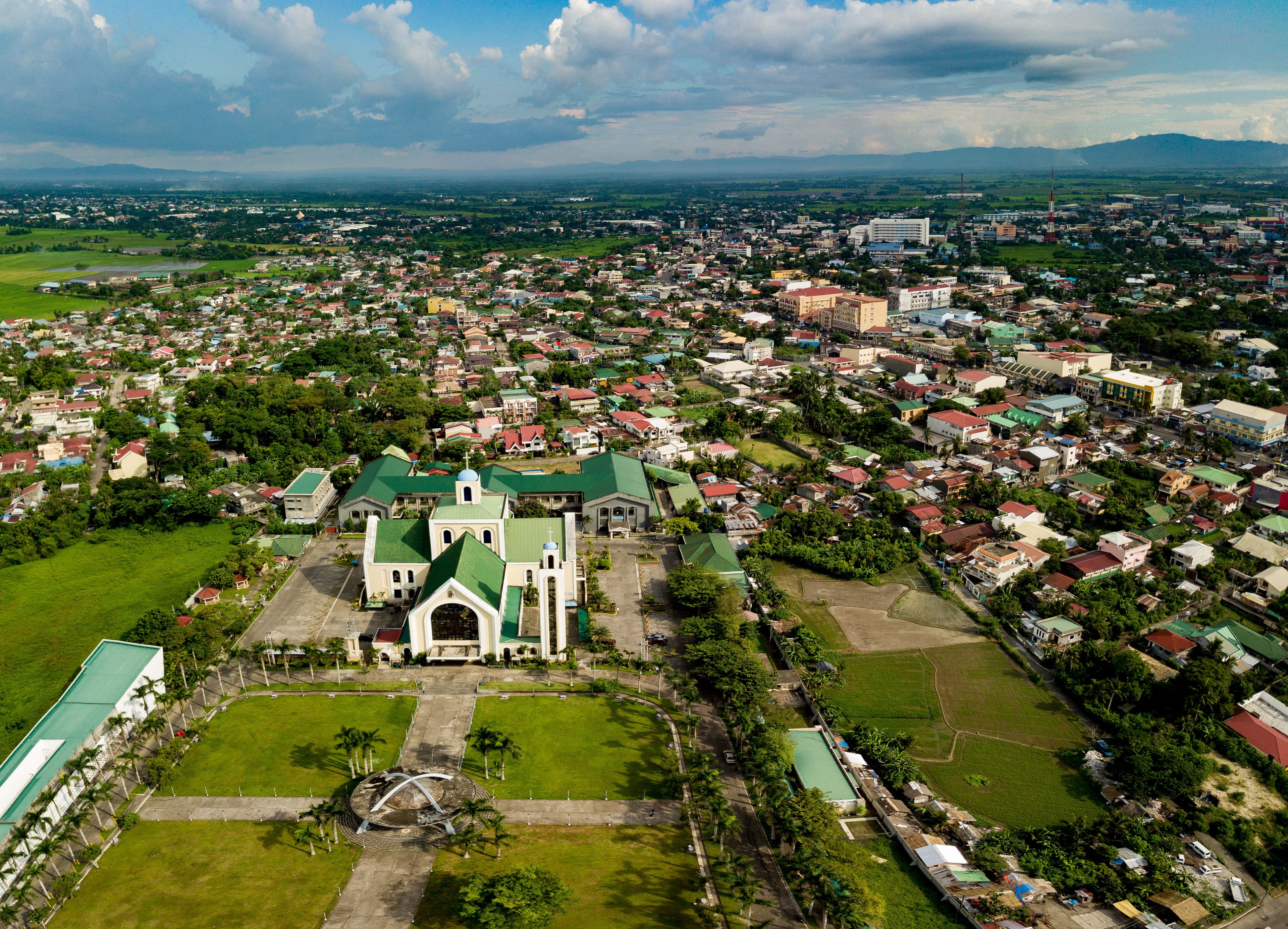
After traversing through the busy and tricycle-congested streets of Cabanatuan, one would reach the city’s green lung and pride in disaster preparedness: a low-lying barangay directly facing the Pampanga River, equipped to face the atrocities climate change is posing--Barangay Pagas, Azaleah’s home.
Reinventing Solid Waste Management
Barangay chairman Christopher Lee recalled that they faced several obstacles in laying out their vision of an eco-friendly barangay back in 2013. The prominent problem they encountered, he shared, was that the people were uninformed about proper waste management and existing ordinances.
“Napakarami nating batas, napakarami nating ordinansa pero sa totoo lang ay kulang ng implementation,” the barangay captain said, highlighting that Republic Act 9003, or the Ecological Solid Waste Management Act, still lacks implementation almost two decades after it was signed into law. (We have many laws and ordinances, but, honestly, the enforcement is lacking.)
Motivated to protect the environment, Lee, together with the local government unit (LGU) of Pagas, crafted a plan to implement solid waste management properly. They started by educating constituents about solid waste management and taught them how to segregate garbage.
The administration also established five (5) Material Recovery Facilities (MRFs) used by its four (4) puroks, which receive, separate, and prepare recyclable materials for shipment to recyclers.
Just recently, the barangay launched its project “Eco-Bricks.” In this program, households were asked to fill plastic bottles with other plastics ranging from shampoo sachets to toothpaste containers as a way to minimize waste, leaving only residual waste or solid waste materials that are neither compostable nor recyclable to be collected by the city’s garbage collection system.
With good governance and strict ordinances, Pagas LGU achieved its vision of strengthening waste segregation and disposal.
In 2018, Pagas won the search for the Cleanest and Greenest LGU (Model Barangay on Ecological Solid Waste Management) in Region III, as recognized by the Department of Environment and Natural Resources (DENR).
There is Gold in Rubbish
Pagas’s solid waste management strategy not only cleanses the barangay but also benefits its students. Many households donate their kalakal (recyclable materials) to the LGU. The local government then sells the collected recyclables and uses the proceeds to provide financial assistance to students living in the barangay.
According to Lee, the program has assisted 160 students. Now that education has shifted due to the pandemic, he said they are using the P180,000 proceeds from last year's collection to donate supplies needed for distance learning.
Azaleah is one of the barangay's scholars. She said the financial assistance the Pagas local government provided greatly helped its beneficiaries, as it lessens parents’ expenses for their children’s education.
Coping with Nature’s Wrath
Being a low-lying area in the city, Barangay Pagas developed a strategic disaster response to address the overflowing Pampanga River during typhoons.
The 53-hectare community of over 3,000 locals has equipment, facilities, and proper training for its residents. “Kailangang i-train hindi lamang ang mga rescuer, kung hindi pati ang buong barangay,” Lee said as he shared their system in disaster response. (Everyone in the barangay must be trained, not only the rescuers.)
Utilizing a siren that can be heard by the whole community, the administration was able to provide its people with warnings and instructions: one long blast means that there is an impending disaster, two long blasts mean that everybody should prepare to evacuate, and three long blasts mean that one should stay inside because the situation outside is too dangerous.
Because of this, Barangay Pagas has been the Gawad Kalasag Regional Awardee for the fifth consecutive year, since 2015, an annual award given by the Office of Civil Defense for outstanding contributions in disaster risk reduction and management and humanitarian assistance. Pagas extends disaster preparedness to other communities by conducting trainings.
Lee expressed concern about climate change, which causes stronger calamities that directly affect the country and Barangay Pagas in particular, adding that it is a huge problem and people are bound to face extreme aftermaths if they do not learn to unite.
He added that the youth's education should include disaster preparedness training, as it will serve as an eye-opener for them.
For Pagas, the next move is to encourage other communities to pay more attention to the environment. Progress is always the aim of this barangay, and discipline has always been the key. The barangay has come this far, and it will go farther and reach greater heights in its quest for a sustainable, prepared, and eco-friendly community.
This evergreen story was first written in 2020 by Klyde Charles Painor (Student-Journalist) and Anna Kristel Cuevas (School Paper Adviser) from Honorato C. Perez, Sr. Memorial Science High School, Division of Cabanatuan City, as a final output of DepEd-DRRMS and AYEJ.org’s Green Beat Initiative: An Online Environmental Journalism Training.


Comments